
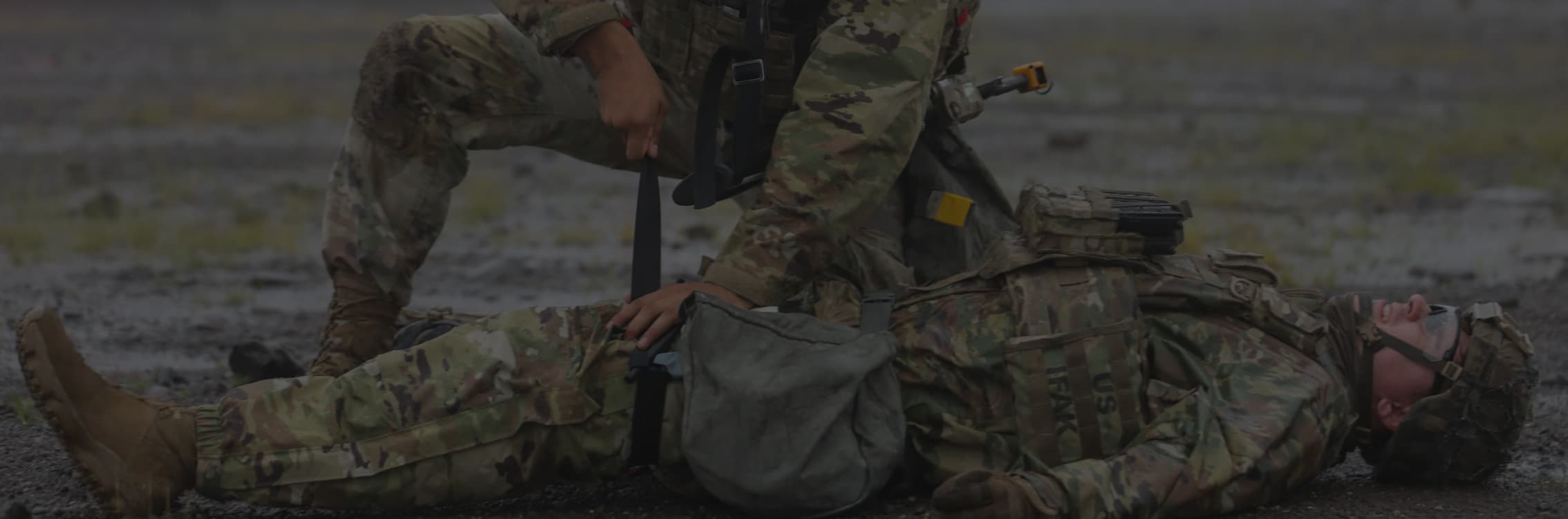
It started with soldiers. What they learned on the battlefield came home with them—and is now helping save lives in communities everywhere.
A person can bleed to death in minutes, sometimes before the ambulance is even on its way. Regular soldiers proved that ordinary people, trained in a few simple steps, can keep someone alive until help gets there.
About the program
STOP THE BLEED® is an official program of the U.S. Department of War. It takes what the military learned about stopping severe bleeding in Iraq and Afghanistan and teaches it to civilians. The course takes about an hour, and no medical background is required.
Purpose, vision, and promise
- Purpose
- Empower ordinary people to save lives by controlling severe bleeding.
- Vision
- Make bleeding control training as common as CPR. More than 20 million people a year are trained in CPR in the United States, based on reporting from the American Heart Association and the American Red Cross. That is the scale the program is working toward.
- Promise
- A Department of War program you can trust for the highest standard of bleeding control education and equipment, wherever and whenever it is needed.
Many names, one standard
The same skills and the same kinds of kits are sold under a dozen names.
Bleeding control. Bleed control. Hemorrhage control. Trauma kit. Most of these are ordinary English, so anyone can use them, and none of them tells you what standard sits behind the product. Two kits both called “bleeding control kit” can hold completely different contents. Two classes with the same name can teach in completely different ways.
STOP THE BLEED® is a standard, not a description. The name belongs to the Department of War, and it goes only on training and equipment that meet the program’s requirements. Wherever you see the name and logo, four things are true. You can check each of them.
The training is the program's training
A licensed instructor teaches every class from a curriculum the program has approved. Every class covers the same three techniques (direct pressure, wound packing, and tourniquet application).
The equipment has been reviewed
The program has reviewed and accepted every tourniquet and hemostatic dressing sold under the name, working from the Department of War's own battlefield evidence. Each one is a medical device regulated by the FDA.
Each kit is standardized
There are three STOP THE BLEED® kits (Basic, Intermediate, and Advanced), and the program decides what goes in each one.
The seller is licensed
Only companies licensed by the Department of War may sell STOP THE BLEED® equipment. The list of those companies is on the Equipment page.
The rules licensees follow, along with the STOP THE BLEED® Style Guide, are on the Standards page.
The goal is for this to be as ordinary as CPR.
That means people recognize life-threatening bleeding when they see it. It means they know they are allowed to help, and that the kit is on the wall where the injury happens. When the critical minutes come, someone nearby should know what to do.
Our history
2001–2011
Iraq and Afghanistan
Regular soldiers proved it works
Battlefield research showed that blood loss was killing service members who could have been saved. So the military trained everyone in uniform, not just medics, to stop severe bleeding. Deaths from blood loss fell sharply. The lesson carried beyond the military: regular people can learn these skills quickly and use them under pressure.
2011
Policy Directive 8
Preparedness becomes everyone's job
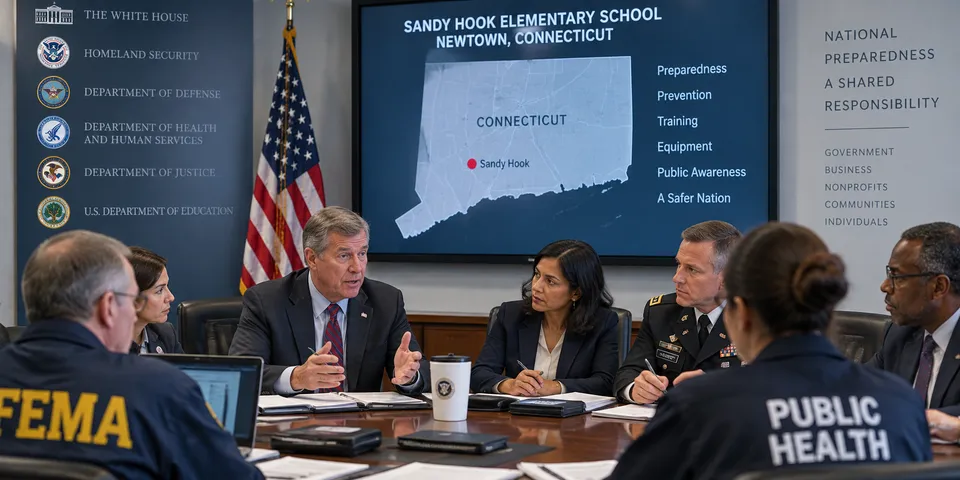
Presidential Policy Directive 8 established national preparedness as a shared responsibility across government, business, nonprofits, and citizens. For the first time, ordinary people were formally part of the plan.

2013
The Hartford Consensus
After Sandy Hook, a national response
The shooting at Sandy Hook Elementary School led to the Hartford Consensus and the Federal Interagency Bystander Workgroup. Military medical experts, trauma surgeons, emergency physicians, EMS, fire and rescue, law enforcement, and federal agencies recommended a national effort to train and equip the public in bleeding control.
2015
National launch
STOP THE BLEED® launches
At a White House ceremony, STOP THE BLEED® launched as a public-private partnership, established as a Department of Defense program and as the quality standard for bleeding control training and equipment.

2020
70 countries
The training crosses borders
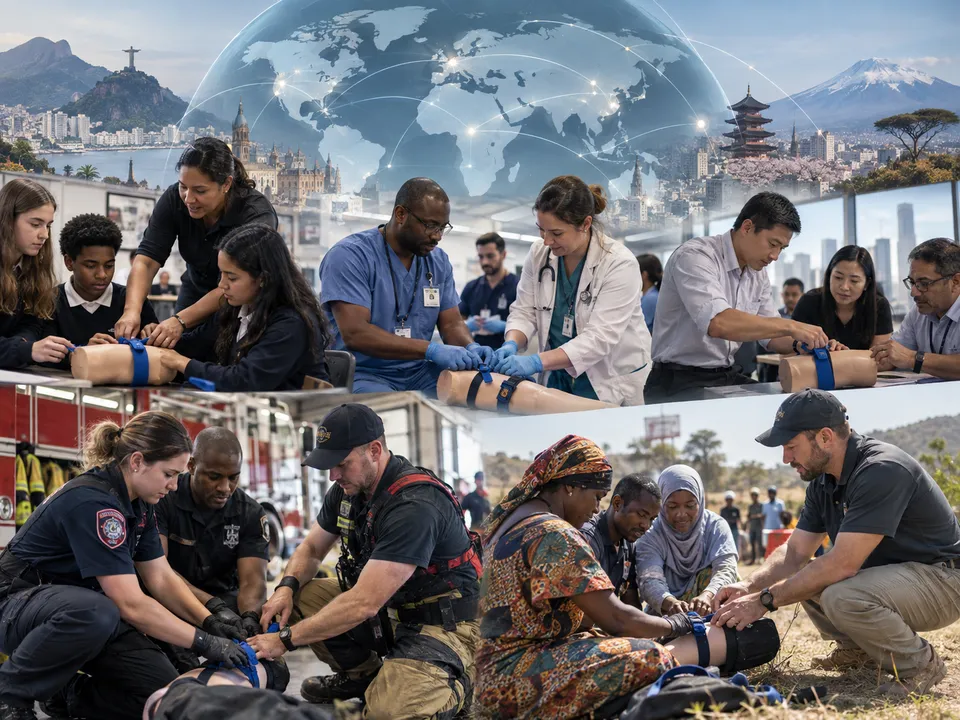
Five years after launch, STOP THE BLEED® was being taught in 70 countries, in schools, hospitals, workplaces, and fire stations far beyond where it started.
Today
50 states · 172 countries
A skill anyone can carry
STOP THE BLEED® is now taught in all 50 states and 172 countries. It is not only for the worst headlines. Car crashes, workplace and farm injuries, falls, and accidents at home all bleed the same way, and what the military learned to save its own is now something anyone can learn.
- States
- 50
- Countries
- 172