
National Preparedness Month: Why Bleeding Control Belongs in Every Emergency Plan
Every September, National Preparedness Month (NPM) reminds individuals, families, and communities across the country to take concrete steps toward emergency readiness before disaster strikes. Most people immediately think of hurricanes, wildfires, earthquakes, or severe storms when they hear the word “preparedness.” But true readiness has to go further than weather and natural disasters. It also means being ready to respond when someone’s life is on the line because of a traumatic injury.
That’s where STOP THE BLEED® comes in.
Bleeding Control Is Emergency Preparedness
STOP THE BLEED® is an official program of the Department of War, built on lessons learned from combat medicine during the wars in Iraq and Afghanistan about how to control severe, life-threatening bleeding. Today, that same knowledge is saving lives far from the battlefield, in car accidents, workplace injuries, school incidents, and everyday emergencies in homes and communities nationwide.
The program exists because of a hard truth: severe, uncontrolled bleeding is one of the leading causes of preventable death from trauma. A person can bleed to death in a matter of minutes, often faster than emergency medical services can arrive on scene. That gap between when an injury happens and when professional help shows up is exactly where a trained bystander can make the difference between life and death.
This is why bleeding control belongs at the center of any conversation about personal and community preparedness. Just as families plan for fires or floods, they should also plan for the moment when someone nearby is badly injured and needs immediate help.
The Bystander Effect, Reversed
Traditional emergency planning tends to focus on what happens before and after a disaster: stockpiling supplies, mapping evacuation routes, staying informed about alerts and warnings. STOP THE BLEED® fills a different, equally important role. It prepares people for the critical minutes during an emergency, when a bystander may be the only person capable of acting before professional responders arrive.
This shift in mindset, from bystander to immediate responder, is at the heart of the STOP THE BLEED® mission. Just as CPR and AED training transformed how the public responds to cardiac emergencies, bleeding control training is changing how communities respond to traumatic injury. The techniques themselves are straightforward and can be taught in a single session, but the impact of that knowledge can be the difference between a tragedy and a survival story. No medical background is required, only the willingness to learn and the confidence to act.
Communities that embrace this training multiply their own resilience. Schools, workplaces, houses of worship, and public venues that host STOP THE BLEED® classes and stock STOP THE BLEED® kits are building the same kind of layered readiness that National Preparedness Month promotes for natural disasters and other large-scale emergencies. A single trained individual can make a difference in a single incident; a community full of trained individuals, equipped with accessible kits, creates a much broader safety net for everyone who lives, works, or gathers there.
How to Get Prepared This September
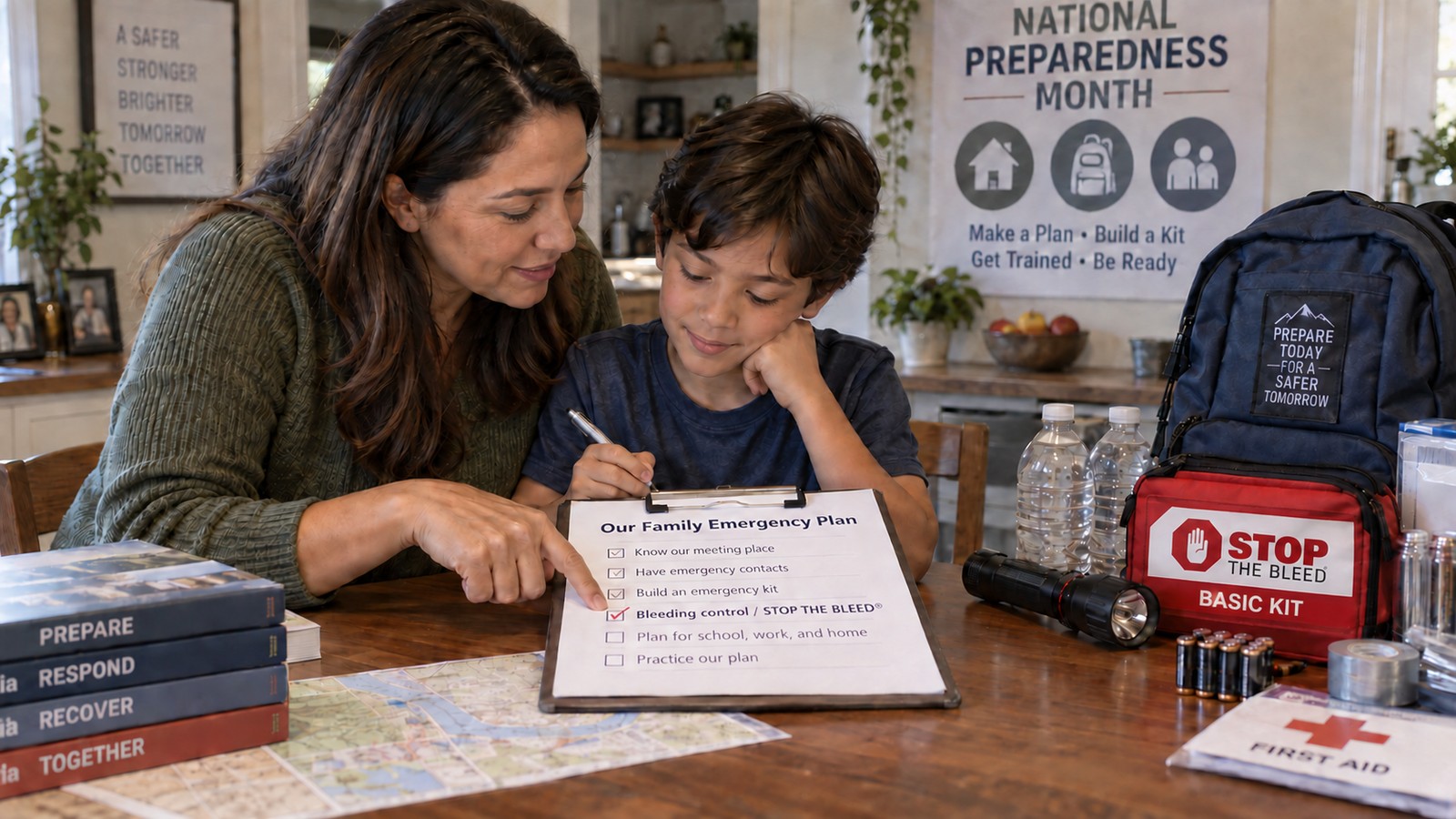
National Preparedness Month is the perfect moment to close the gaps in your own readiness. Here’s how STOP THE BLEED® fits into a well-rounded preparedness plan:
Take a STOP THE BLEED® class. Hands-on training teaches you how to recognize life-threatening bleeding and use direct pressure, wound packing, and a tourniquet to stop it, skills that take only a short class to learn but can last a lifetime.
Build an emergency supply kit. A well-stocked kit, whether for your home, car, or workplace, should include basic first aid and bleeding control supplies alongside food, water, and other essentials.
Make a family emergency plan. Preparedness isn’t just about supplies; it’s about knowing what to do, who to call, and how to communicate when something goes wrong.
Get a STOP THE BLEED® kit. A STOP THE BLEED® kit is sold only by companies licensed by the Department of War and contains only tourniquets and dressings the program has reviewed and accepted. Keeping one at home, in the car, in a classroom, or at work puts the right tools within reach in the critical minutes before help arrives. Learn what to look for on the STOP THE BLEED® Equipment page.
Every Second Counts
Emergencies rarely announce themselves in advance. The same mindset that leads someone to pack a flashlight and extra batteries for a storm should lead them to learn how to stop a severe bleed. Both are about the same thing: making sure that when something goes wrong, you’re not caught without the knowledge or the tools to respond.
This National Preparedness Month, take the next step. Learn the skills, gather the supplies, and make sure the people you love, and the people around you, have a better chance if the unexpected happens.
Ready to get started? Find a STOP THE BLEED® class near you and take the first step toward becoming someone who can act, not just watch, in a life-threatening emergency.
STOP THE BLEED® is a registered trademark of the U.S. Department of Defense.