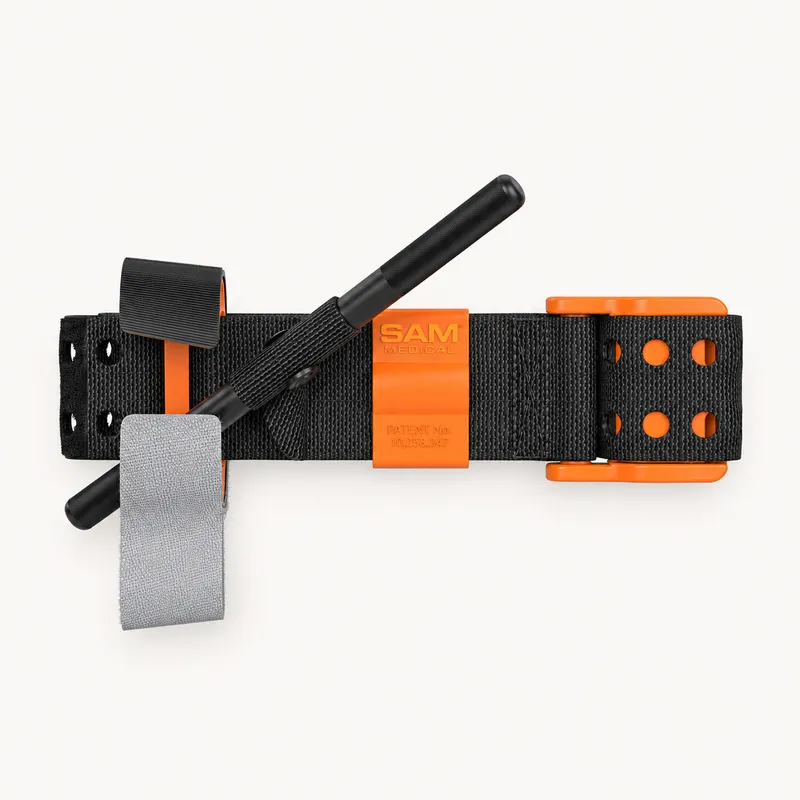
SAM® XT Extremity Tourniquet
SAM Medical · Windlass with auto-locking buckle
A buckle that locks automatically once the strap reaches a set tension, so the band is seated tightly before the windlass is turned.


Four tourniquets are accepted by the program as the tourniquet component of a STOP THE BLEED® kit.
Each is on the Department of Defense Committee on Tactical Combat Casualty Care (CoTCCC) list of recommended devices, and each is a medical device regulated by the U.S. Food and Drug Administration. They are listed below in no particular order.
SAM Medical · Windlass with auto-locking buckle
A buckle that locks automatically once the strap reaches a set tension, so the band is seated tightly before the windlass is turned.
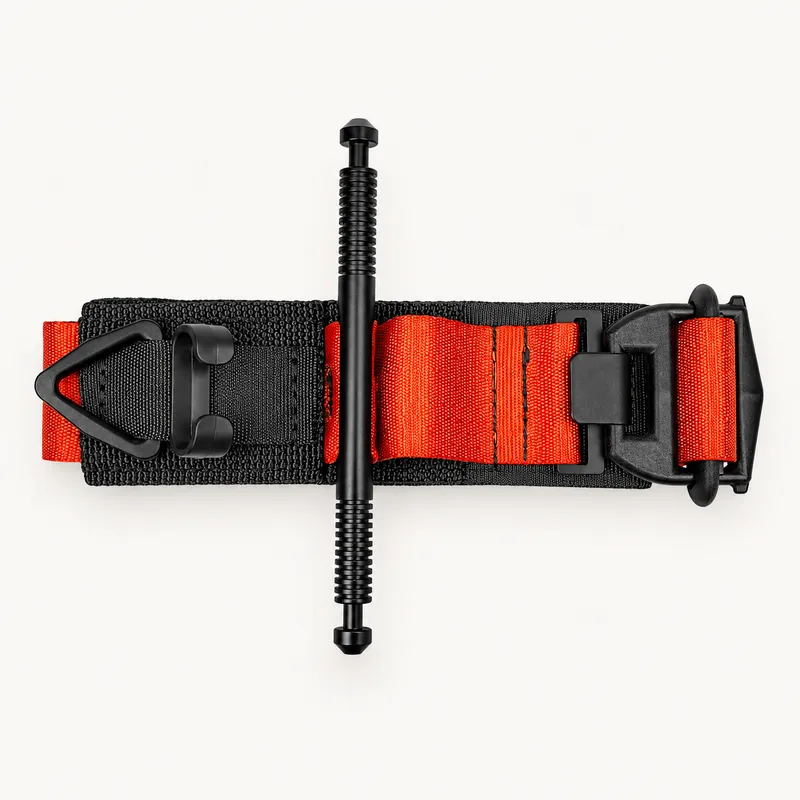
Alphapointe · Windlass with hinged locking bar
A wide band held open by a stiffened strap, so it does not collapse while being positioned, with a hinged bar that captures the windlass.
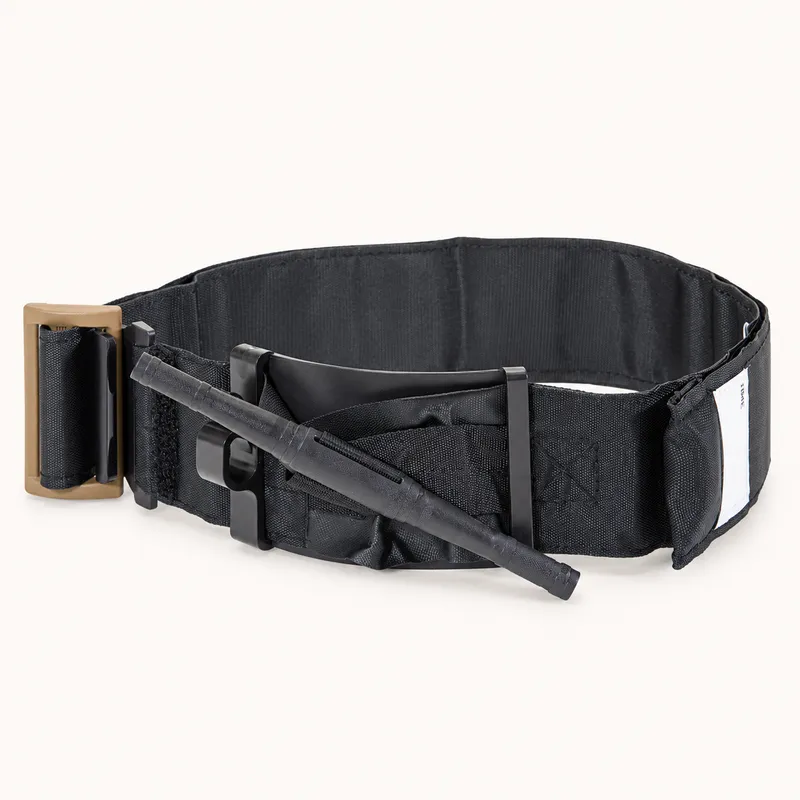
TacMed Solutions · Windlass with metal buckle
An aluminum windlass handle and a buckle that opens, so the strap can be routed around a trapped or pinned limb instead of threaded over the end. Wide band, heavier hardware.
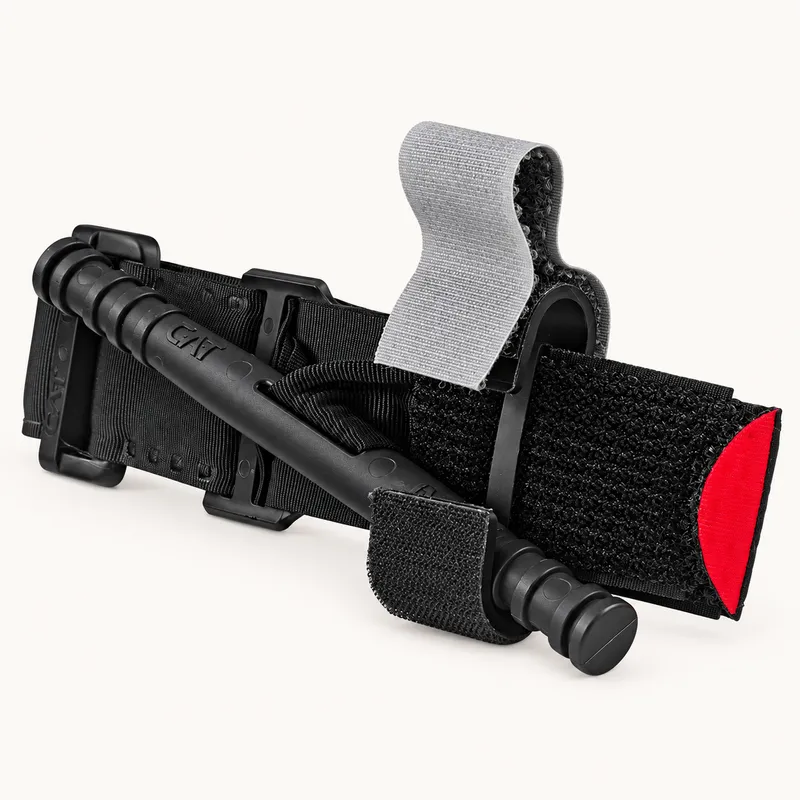
North American Rescue · Windlass with locking clip
A self-adhering band tightened by a rod, which is then locked into a plastic clip. This mechanism is commonly used in STOP THE BLEED® classes, so many bystanders have trained on it. It can be applied one-handed to the user’s own arm.
Medical devices, not accessories
A tourniquet is a medical device. Each of the four above is manufactured by a company registered with the U.S. Food and Drug Administration and is listed with the FDA as a medical device under 21 CFR Part 807. Each also appears on the CoTCCC recommended devices list, which is the Department of Defense’s evidence-based reference for battlefield trauma care. The program accepts tourniquets from that list that a member of the public can apply with the training the STOP THE BLEED® class provides.
Only these four may be packed in a STOP THE BLEED® kit. A licensee cannot substitute another tourniquet, and a tourniquet sold on its own under the STOP THE BLEED® name must be one of the four. Counterfeit copies of these devices are common in online marketplaces and can fail under load; buy from a licensed seller, and if the price or packaging seems off, look more closely.
These notes are only here to help you tell the four apart. They are not instructions, and none of the four is recommended over the others. Put a tourniquet on the way your STOP THE BLEED® class taught you and the way the directions on the package say. Find a class near you.
Combat Application Tourniquet, C-A-T, SOF, SAM, and TMT are trademarks of their respective owners and are used here to identify accepted devices. FDA registration and listing do not constitute FDA approval or endorsement of any device.